Showing posts with label living well on less. Show all posts

Monday, January 4, 2016

20 Things Frugal People Do some tips and tricks that will save you money!

I'm cheap. You can call me frugal, thrifty or a good shopper.  Perhaps even a mindful consumer. If I had to pick a word to describe my spending style, I think I would like to be considered resourceful. 
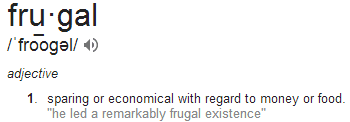
According to the dictionary, frugal means sparing or economical with regard to money or food. I suppose that's a good word to describe how we chose to live.  And it's one most people can relate to.

I really like to live well on less.  That's sort of my motto.  We started out married with a newborn at the ripe old age of 20 and 21, part of being frugal came out of necessity. Next year, our oldest son is starting college, and well, we are going to be going back to working with a pretty bare bones budget. However, through the years, we have found out just how far we can push our budget without really feeling like we are missing out on anything.  We really do live pretty darn well on less. 
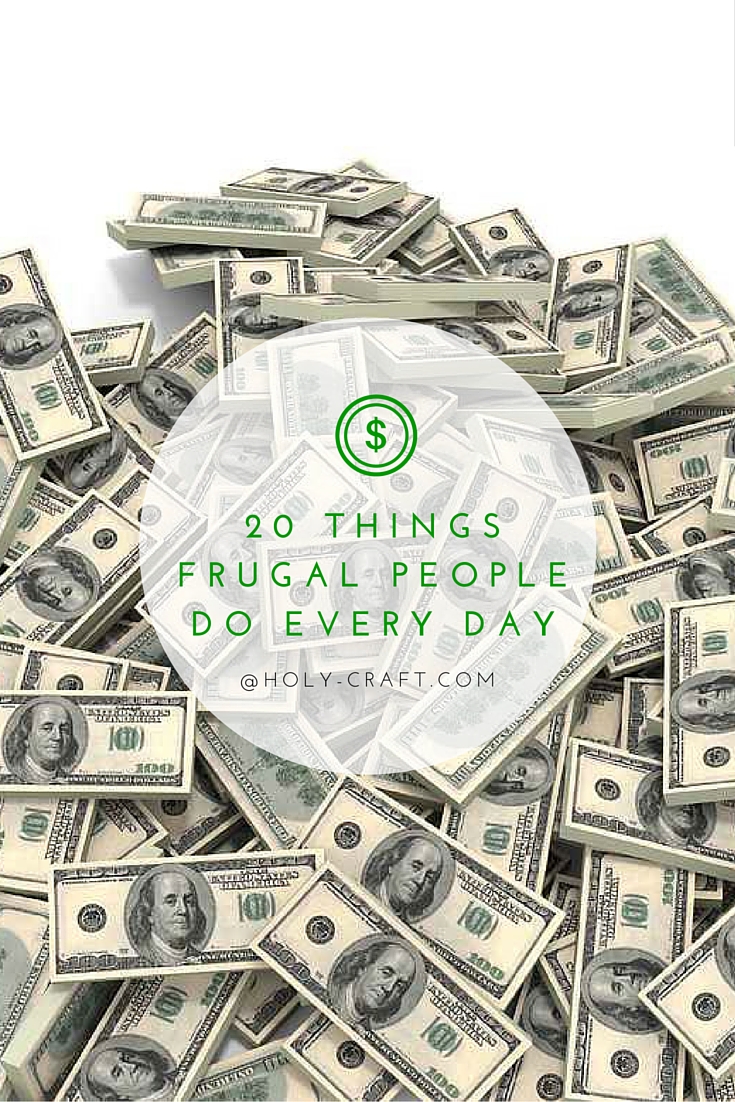
I've written a list of 20 things that frugal people do every day to save them money.

Thursday, December 17, 2015

Vintage tablecloth turned into Christmas tree skirt

I love Christmas! I love decorating for Christmas and I love unpacking my Christmas boxes every single year. Every year I add to the boxes with handmade ornaments like I featured all last week in my six days of handmade. Sometimes, I add big items, sometimes I add small items.

This year, one of the new items I added to my Christmas decor was a new tree skirt. But not just any tree skirt. It's a tree skirt that I made out of a pretty amazing vintage round tablecloth that we got from my husband's grandmother's estate just after she passed away this summer.

I actually see round tablecloths like this at garage sales and estate sales quite often, so in case you are like me, you can pin this or tuck this away and remember when garage sale season starts back up again to keep your eyes peeled for a round tablecloth to make a no sew Christmas tree skirt.


It took me under 5 minutes and I promise, there is really no sewing to make this tablecloth into a Christmas tree skirt. Want to see how?

Wednesday, September 16, 2015

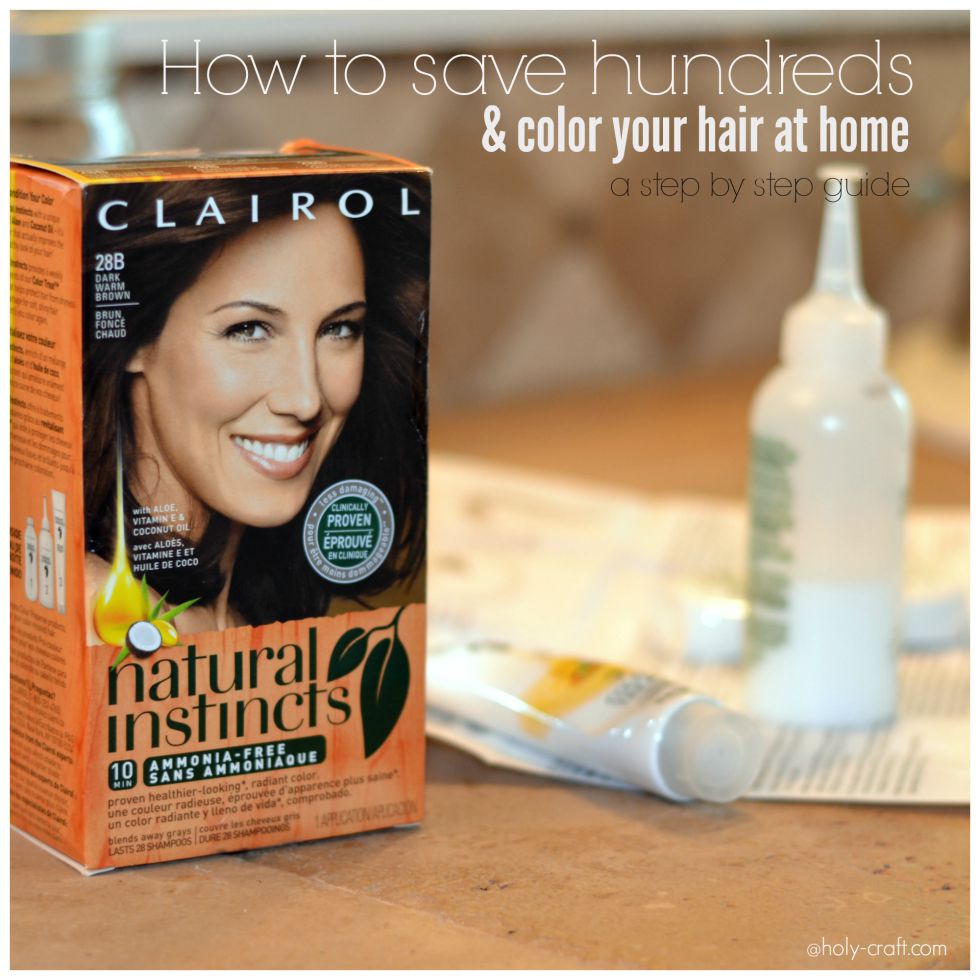
How to save hundreds of dollars at the salon and color your hair at home-a step by step guide

It all started when I was 15. I was out with my best friend shopping at Target with money to burn{those were the glory days!}. Somehow I ended up in the hair dye section and picked up a box. 

I was walking the aisles of my daughter's jr. high a few weeks ago and man, I'm telling you, that time of life is full of experimentation with one's looks.  So it's not surprise, that I started playing around and started changing the color of my hair.

I can remember only two times in my life that I have actually paid someone to dye my hair for me and each of those times I couldn't believe how dang on expensive it was. 

Now instead of experimenting with my look and changing the color of my hair, I am dying my hair to cover the grey. 

Either way, with 22 years of experience and probably thousands of dollars saved, I am here to offer my expertise and give you a step by step guide on how you can dye your hair at home. I promise, it's not that scary!


Monday, April 8, 2013

Living Well on Less series-saving money on your lawn and garden

It's another month, and another opportunity to share with you 
a few ways that our family is able to live well on less.
In case you missed the previous posts in this series, you can find them here:
Saving money on travel and entertainment
Save money on clothes for the whole family
15 tips to save money on your food bill
saving money on your cell phone
how to survive without cable
I've had a few blog readers suggest that I offer up some tips for ways to save money on your lawn and garden, and I am happy to oblige!
My husband and I bought our first house when I was 22 and we have learned a lot through the years!
There are lots of extra expenses of home ownership that are inevitable, but over time, we have found some tips and tricks to keep the costs low.
Yard waste container
I don't know if the yard waste bin is a west coast trend or if it happens all over the country, but every month our trash collection agency charges us an extra $10 for our yard waste bin.  We usually only fill up our yard waste bin in the summer when we are weeding and putting in grass clippings, so around October every year, I call our trash collection agency and tell them to cancel our yard waste service.  I just recently restarted the service this month, so from October-April we save $70.  Many people don't realize they can do this.  Look into it if you aren't using your bin.
While we are talking about garbage collection, when we bought our first house, our trash service already had a large 60 gallon container that we were being charged for.  I quickly learned that we could get a smaller can and a lower garbage bill {we saved $10 a month switching to a smaller can}.  We rarely filled our garbage bin full and our family of five can easily make do with a 30 gallon container.  

When we bought our first house, the homeowners were downsizing to a condo and didn't need their nearly new lawnmower.  We purchased it from them for $100.  It served us well until my husband mowed over a boulder, and a replacement lawnmower was found at a garage sale {again, a nearly new lawnmower in great condition}.  That said, garage sales and second hand are a great place to buy like new lawn equipment.   Mowing your own grass can save you upwards of $100 a month or more!
The only lawn maintenance I hire out is once a year {usually in March or April}, I ask the lawn service that is already in the neighborhood servicing our neighbors lawn, if they can edge my lawn for me.  I pay them $20 cash.  My husband hates doing it, and it's important to me to have it done.  I know some people edge their lawn every time they mow it.  I bought my husband a commercial grade lawn edger {at a garage sale of course!}, and he promptly broke it {coincidence?  I think not!} so it continues to sit broken in my father in law's garage {he's waiting for help to fix the problem...or something}, even though an edged nicely cut green lawn makes his wife happy.  $20 once a year to get my lawn edged keeps me happy...ish.
Lawn Care Services
Several of our neighbors hire out their lawn care maintenance.  You know, the guys who come along in their official looking trucks, reel out their long hoses and start spraying chemicals all over the lawn.  When we first moved in, I had the neighborhood service give me a quote.  I was appalled at how much it was!  After I got that quote, I quickly rationalized that I could get a lawn fertilizer spreader {at a garage sale for $3} and pick up a bag of the best fertilizer in spring, summer and fall, and still not even come close to one lawn application!  So that is what I did!  I spend around $20 on fertilizer each year by looking for sales and rebates and I spread on fertilizer in the spring, summer and fall.
I shared with you a few years ago how we hired a landscape designer at our old house when we re did our yard.  For around $100 a plant expert drew out a plan for our yard and gave us a plant by number version for us to use.  Since I had tried and failed, this advice was priceless.  It gave me the confidence to try my hand at landscape design at our new house.
So with favorite plant names in hand, I headed over to Wal-Mart.  Not my favorite store, but cheap plants with a year long guarantee had me sold.  If you are buying plants, check with the store or nursery that you are buying them at and see what their guarantee is.  Sometimes you buy a plant and it just doesn't like it's new home.  It's nice to know that you can return it for the full price {just keep your receipts}.  Speaking of which, I have a few that need to head back this year!
I know a lot of people like to plant annuals each year.
Annuals can get pretty pricey, so I like to keep the area that I plant them contained to just a small front pot.
If you plant perennials, over time they grow and then can be divided.
You can even find a friend or neighbor and ask them if you can divide their plants for them.
Most people are happy to oblige, especially if you do the dirty work!


If you have the space, you can also save money by planting and growing your own vegetables in a garden.
At our old house we had room for a raised bed, at our current house, I'm pretty sure the dog would dig up anything she thought was food or might turn into food in about five seconds!


I love my fresh produce though, so I visit my local farmers market, fruit and veggie stands, my cousins grocery store {Harbor Greens shout out!} and I join in buying bountiful baskets.  I don't think fresh local produce has to be expensive.  You just have to know where to buy it.

Speaking of gardening, you can also compost your lawn clippings, and fruit and vegetable scraps. Compost makes a great addition to any garden and will help those plants grow like wild fire!


Planting trees or making the most of the trees that are in your lawn is another way to save on your utility bill.
Most houses in our area don't have air conditioning, so if you have the shade from trees your are quite lucky!
Plant a tree and in the first few years you can already start to reap the savings on your energy bill.

source

Patio furniture can get pricey.  It goes quickly at yard sales, but if you are persistent you can find it.
Nearly 10 years ago, I bought a set for 75% off in late summer from Fred Meyer.
Stores don't want to keep patio furniture around in the winter {unless you are in a warm state}, so keep your eyes open for sales.

And speaking of seasonal sales, you can also find seasonal sales on plants.
Most nurseries or garden centers don't want to carry plants through the winter, so they deeply discount them.
If you don't have a green thumb, stick with the hardy plants and as always, keep your receipt just in case your plant doesn't make it through the winter!

Those are a few of my tips to save some money on your lawn and garden.
Do you have any tips you can share with me?

Monday, March 11, 2013

Living well on less-how to save money on entertainment and travel

It's a new month, and another opportunity to share with you how our family is able to live well on less.
In case you missed the previous posts you can find them here:
Save money on clothes for the whole family
15 tips to save money on your food bill
saving money on your cell phone
how to survive without cable
If you are a family with children still living at home, many of you will be having spring break in the next few weeks.  This is a time of travel for many, and for others a time of scheduling activities that your family doesn't usually have time for when school is in session.

This month our focus is on saving money on travel and entertainment.
Our family has taken some amazing vacations.
We have visited all inclusive resorts in Ixtapa, Mexico, visited Disneyland not once, but three different times, gone to Legoland, taken a 7 day Mexican Riviera cruise and skied the slopes in Whistler, BC to name a few.  
My husband and I have had time to get away to Puerto Vallarta, Cancun, and taken a Mexican Riviera cruise (yep, 2 cruises, 10 months apart).  We hope to spend a relaxing week away in November this year to celebrate our 15th wedding anniversary.  
With friends {with flight benefits} I have been able to travel to Maui, Cancun, Puerto Vallarta, and Washington DC.
Santa's Arrival by Canoe
I mention these trips, not to make you jealous, but to let you know that you too can travel with your family on a budget.  I will also take this time to make a disclaimer.  
We have been fortunate enough to travel with our extended family, with them covering some of the travel expenses for us.  Several of our family vacations wouldn't have happened without their financial support.  My  dad had a job for years in Southern California, so a visit to his place always included a trip to Disneyland.  We love to travel and appreciate the times that we get to experience a family vacation with more than just our immediate family.
The easiest way to save money on travel is to not go anywhere or do anything.
But then life would be pretty boring now wouldn't it?
One way that we are able to travel is to plan ahead.
We may not always know where we are going, but if we plan ahead for a time period {say June of 2014}, we can spend time searching for the best flight and hotel deals and then can narrow our search from there when we find a good deal.
With three kids and a dog, it's hard to be spontaneous, but I will often times search last minute travel sites {it's how we were able to book a cheap family cruise on Royal Caribbean}.  If you find yourself itching to book last minute travel you can check the last minute deals on expedia.  I've also used vacations to go 90 day ticker to look for resorts and cruises.
Another tip to saving money when you travel is to
  go when no one else is going.
Spring break is not only an incredibly busy time to travel, it's also quite expensive.
Airfare to many locations usually doubles if not triples over breaks and popular travel holidays (Christmas, spring break, Thanksgiving).  
I know lots of families tend to head to Disneyland for spring break.  In our experiences, I would rather take the kids out of school then face the lines and long waits that occur at popular destinations like Disney.  If we are planning a trip to a popular destination like Disney or Legoland, we try to book our trip when no one else is going to be there.  It makes our visit more enjoyable with less waiting and we are able to experience more of the park and attractions making more bang for our buck.
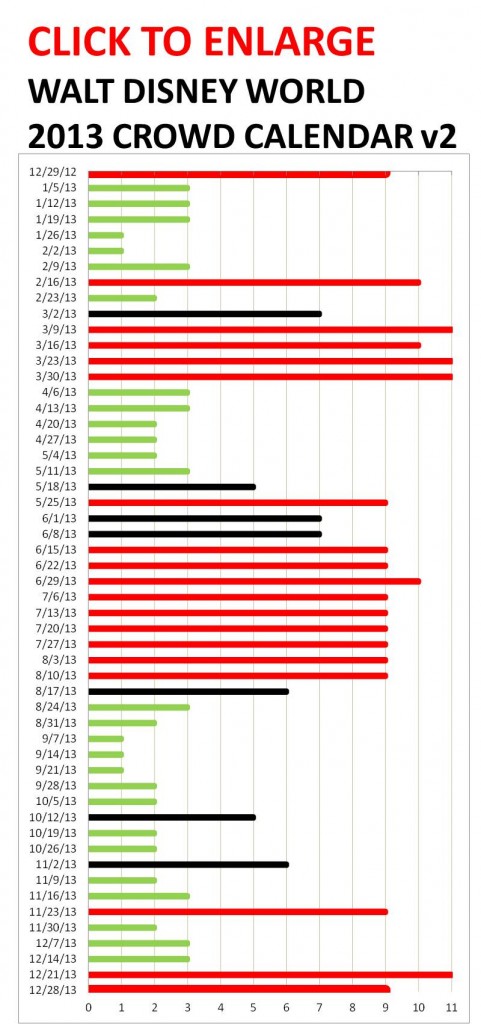
This graph is a great indicator of lower crowds at Disney World (and I find it true with what I have seen for Disneyland as well).  Go in the green, not in the red.
Disney World 2013 Crowd Calendar
Try an all inclusive
I know hearing the term all inclusive may sound expensive, but you can often times get great deals at all inclusive resorts and sometimes kids stay and eat free.  Last year, I wrote a few tips on how to make the most of your all inclusive vacation.  My husband and I love visiting all inclusive resorts because you don't have to worry about food costs and going out for all of your meals.  You can eat as much as you like and you don't have any hidden costs while at an all inclusive.

Watch for the best deal, even after you have made reservations.
Many airlines and hotels are offering the best price guaranteed.  A few years ago, we booked a trip to Puerto Vallarta months in advance, but when we saw that the flights had decreased in price, we were able to get a refund on the difference of the price we paid and the price that was available.  With the internet, many hotels will match the best price that you find, even if you have already booked your reservation.  Just know that after you have booked your vacation, your job isn't done yet!  Keep checking on those prices to make sure you get the best deal.
If you are flying, travel light
Most airlines charge an extra fee for checked baggage.  Learn to travel light and save yourself some money.  Lets be honest, you probably over pack anyway.  When I took my two younger kids and myself to San Diego for four days, I managed to get everything that we needed packed in a carry on and a backpack.  It is possible!

Plan your meals
If we are traveling, we try to book a hotel that provides a free Continental breakfast.  When I went to Maui with friends, I brought along bowls and instant oatmeal.  I also packed protein filled snacks to keep me full until dinner, which was the only meal that we would eat out.  When we travel as a family, I try to pack as much food as I can or we visit a grocery store while we are in the area so that we can keep food costs low.  If you can, stay at a hotel that has a few conveniences like a mini fridge and microwave to make life easier.
Be creative
When we took our cruise, we found that the bus transfer for our family of five from the airport to the cruise terminal was actually more expensive than hiring a limo.  When we are traveling this summer for two weeks, we looked into hiring a shuttle to take us to the airport, but actually found that it's cheaper {and more convenient} to leave our car at a nearby lot for the time that we are gone.  When we travel to Mexico, I do lots of research about the average van transfer rate to our resort so that I know how best to negotiate for prices, because as we have learned, everything is negotiable in Mexico!
Be flexible
If you are flexible with your travel days, you can often book cheaper airfare and hotel rates.  Leaving mid week usually saves you some money on travel.
Research
When you travel, you probably are visiting somewhere people have been before.  With the power of the internet, many people are writing about their experiences and are happy to give you their tips and tricks.  Many resorts and cruise lines are happy to book your excursions for you, but these will cost you.  Spending some time doing research ahead of time will save you lots of money and will sometimes give you a better experience.  I've found a wealth of knowledge on cruise forums {even if you aren't going on a cruise} and tripadvisor.
If traveling too far isn't in your price range, or if you just want to save some money by being a tourist in your own city, consider subscribing to groupon, living social and amazon local deals.
Since we try not to travel when most people travel, we usually stay at home during spring break.  I try to find things to occupy our family and groupon deals are great for that.  As a side note, if you do plan on traveling and have plans to be in a certain area, signing up for notices for the areas that you are traveling in and buying living social deals or groupons for the city could save you tons of money as well.
Our family doesn't spend a lot of money on entertainment.
When we first got married, we redefined date night.  Most of the activities we do as a family now are because we have a groupon deal for them.  Just last week we went bowling as a family on a deal we bought at a school auction.  We go out for ice cream, but only with a coupon or groupon.  Movies at the theater?  Not unless it's at the dollar theater!  The deals are worth it.  Just make sure you read all of the fine print and are aware of expiration dates before you click buy.
How does your family save money on travel and entertainment?
Any tips I didn't mention?

Friday, February 15, 2013

Money saving tips for 2013

I am really loving infographics this year.
If you remember my teens and technology post {a parents guide}, I used a few in there.
I'm super visual, so I love how easy they are for me to read.

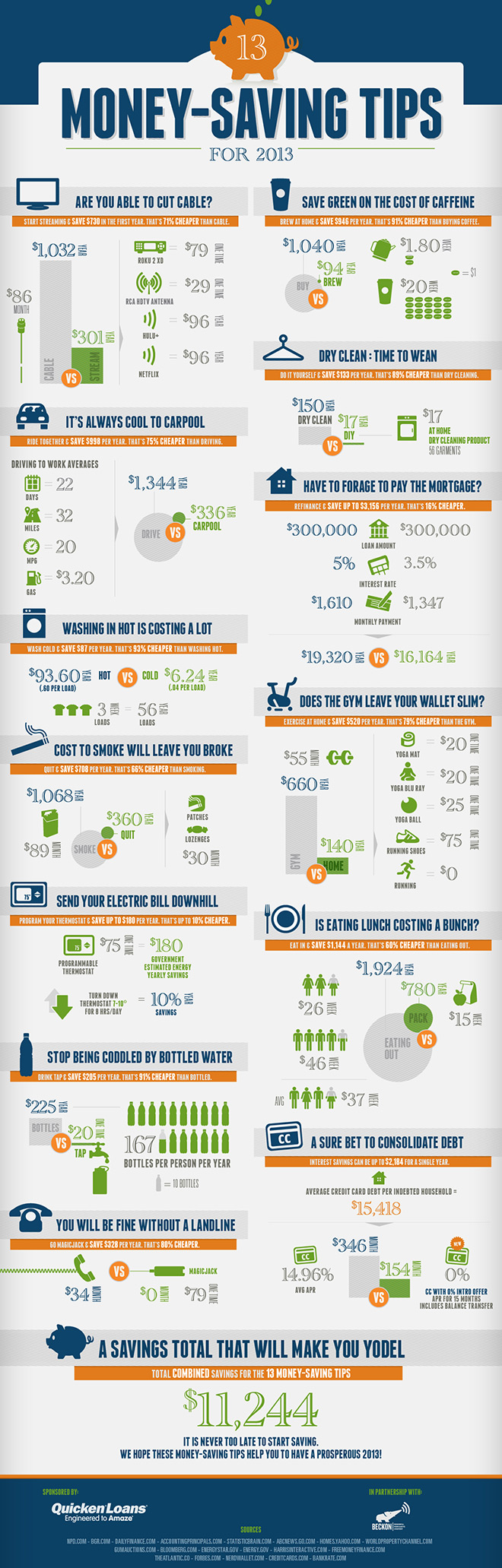
I saw this money saving tips infographic from Quicken Loans and thought that it was relevant to the Living Well on Less series that we have been working through this year.

If you missed any of the Living Well on Less Posts, you can find them here.
Saving money on clothes for the whole family
15 tips to saving money on your food bill
Saving money on your cell phone
How to survive without cable


money saving tips web optimized 13 Money Saving Tips for 2013 Infographic

Do you have any tips you would like to add?
How is your family saving money this year?

Monday, February 11, 2013

Living Well on Less-Saving money on clothes for the whole family

Welcome back to another month of tips and tricks on how to live well on less.

In case you missed the previous posts you can find them here:
15 tips to save money on your food bill
saving money on your cell phone
how to survive without cable
This month, our focus is on how to save money on clothing.
Unless you are the Emperor, we all wear clothes.

Americans spend around $1700 a year per person on clothes.
Clothes can be expensive, even if you are shopping on sale.

So today, I am going to show you how you can save thousands of dollars each year on clothes for your family, but still look like a million bucks!  We all want to be cheap, but not look cheap am I right?!


As a family of five, we spend around $1000 a year on clothing {including shoes, underwear, socks, coats}.
Total.

That's nearly half of what 1 american spends on clothing!
And I must say, we dress well.
On trend, and in name brands.
Several years ago, that number was half {we used to spend around $500 a year for all 5 of us}, but as my husbands pay has increased, in all areas of our life, we have gotten a little bit more lax and loosened the purse strings!
We are crazy, I know!
Here are a few of our tips.

1. Shop garage sales and consignment shops


If I had to guess, about 90% of our families wardrobe comes from garage sales.
The other 10% come from the sale rack and consignment shops.
I can't remember the last time I paid full price for anything!
Lets talk garage sales first.

I have bought North Face jackets for the kids for $1
Complete ski coat and pants from Helly Hansen for $7
Enough Abercrombie and Fitch, Hollister, and American Eagle to make any teenager swoon.


I have dresses from Anthropologie with the tags still on them that I bought for $1
Jeans from Seven for all Mankind and Joes
I've gotten Toms shoes for $3 brand new in the box
Uggs for $3

I have an idea of what is current and in style, and I know what brands hold up.
I know we would spend more money on clothes if we shopped at Wal-Mart!
We actually dress better and save more money than we do if we bought Wal-Mart duds.


The one thing you can count on with kids is that they grow.
If I find an amazing deal at a garage sale in an item that is a few sizes too big, that's o.k.
I just tuck it away in a box in our garage and when they kids grow up in sizes, I get that box out.
It's like shopping, only better!

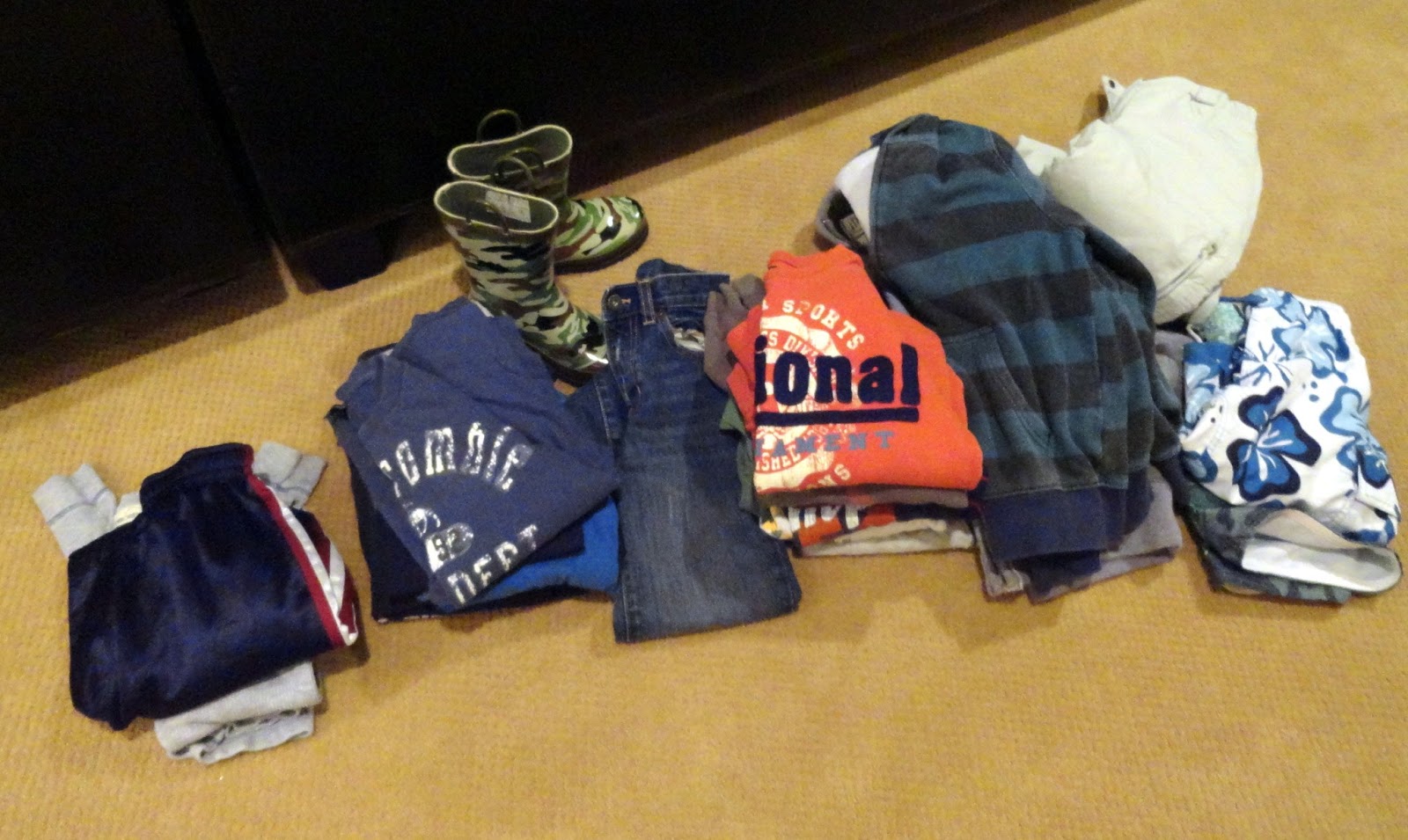
Recently, my youngest son grew out of his old clothes, and moved up a size.
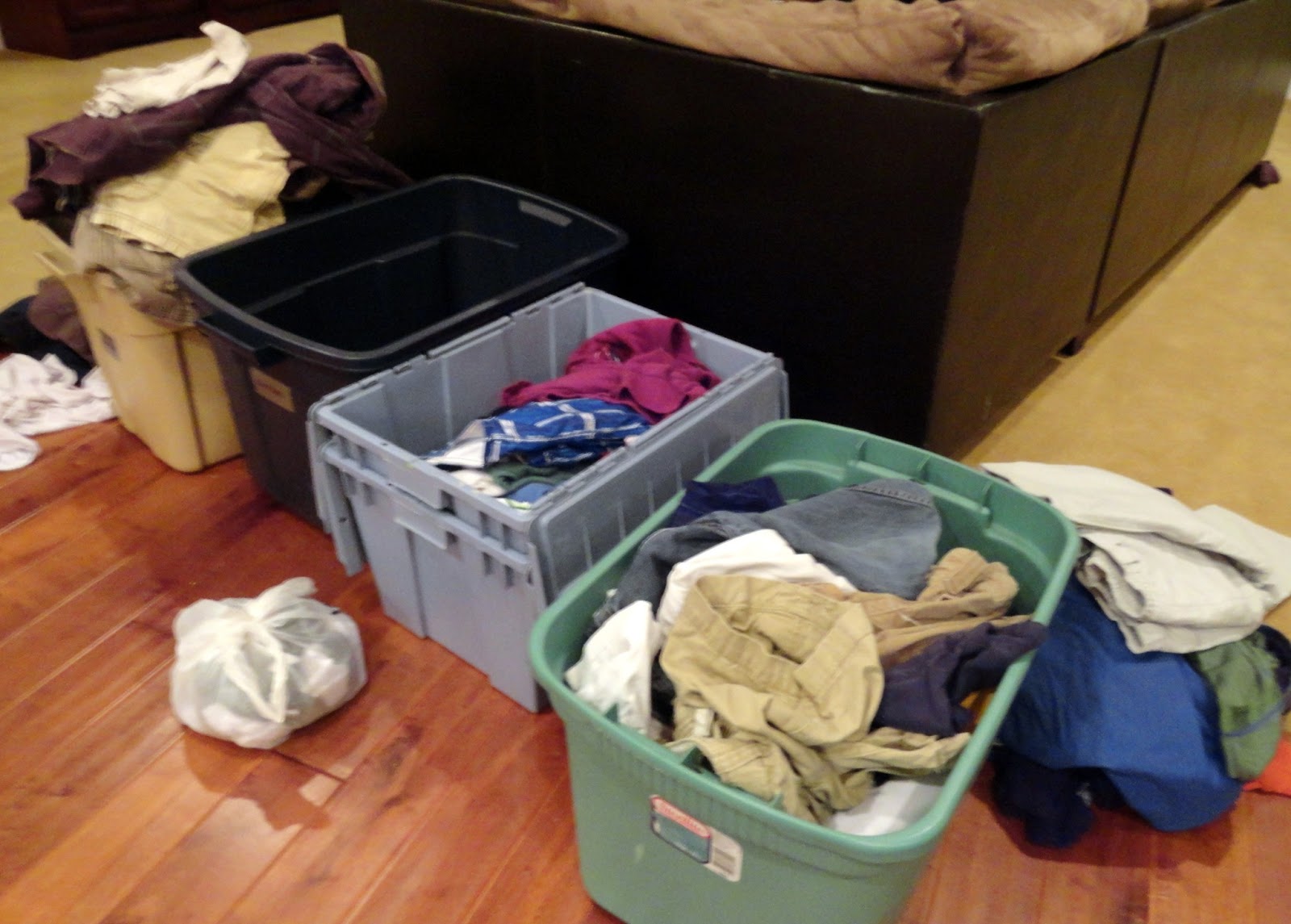
This is the piles of clothes and shoes I had in a box in the garage for him.


If you shop at garage sales, you will know that clothing is usually abundant at most sales.
Usually, you have to take the time to look and sort though to find the gems in the bunch.
I can usually tell with a quick browse through if a garage sale is worth sorting through all of their clothes.

If I pick up an XXXL shirt I will usually know that I can stop looking because they won't have our sizes.

If I find a size that I am looking for, but the clothes are well worn and not in a style that we wear, then I usually stop looking.

But if I find a size I am looking for, and a style or name brand that I like, then I usually take the time to dig through everything.
That is, if the price is right!

Some people still haven't caught on that garage sales aren't the time to mark your jeans for $20.
I like to pay less than a dollar per item at a garage sale.

Usually if you bundle and buy a lot, you can save a lot.

For instance, if each item is $1 and I have 35 items.  I will usually ask if they will take $30 for the bunch.

Most people will.

During the winter, we spend a bit more on clothes and shop at the stores more often.
Our first stop if we need anything though is usually the consignment shop.

Just this week, I bought a brand new North Face jacket for my teenager that retails for $175 for $40.
More than I would pay at a garage sale, but it's current, trendy and something he has wanted for awhile.

I also got him some like new Nike shoes for $8.  Retail price is $180.
I'm finding that as my kids grow older, their clothing is getting more expensive.
Thankfully, I kept this in mind when they were younger.
The kids would probably get only 1 new thing a year.
The rest came from garage sales.

And I never paid more than $1 for anything that they wore.
This is helpful in more than one way.
Kids are messy.

They paint, they roll in dirt, they spill.
If they messed up a shirt, that cost $30 I would probably have had a heart attack!
When it cost only a quarter, I could care less.
 
I remember doing co-op pre-school with one of the kids and I was art mom.
A little girl dressed to the nines in a coordinating outfit from head to toe was being reprimanded by her mom for getting her outfit messy.
She was 2.

She was adorable, but I can't imagine being angry with my child because they were being children.
Clothes are so less important than a child's feelings.

Now that my kids are getting older, they are more interested in particular brands.

Fitting in is important to tweens and teens and I totally understand that.

It's important for me to help accommodate this desire within a budget.
Most of the local consignment shops that I shop at, carry the brands my kids are looking for at around 80% off the retail price.

Some of my favorite consignments shops for my son, husband and I are

Plato's Closet
Runway Fashion Exchange
Both stores pay cash for your old clothes, and both stores carry current styles.

We have a few local kids consignment shops that I frequent like
Heaven Sent
Kid to Kid
Other Mothers

One way I stretch our clothing budget is by selling off our old clothing.
All of the consignment shops I listed above, I have sold clothing to.
It's very easy to sell, but does take some work on your part.
Some shops are pickier than others, and some will make you jump through hoops to just take your clothing in.

Once you know what they expect, it's not too hard.
Common expectations when you sell at a consignment shop (for kids and adults):

 bring in items that are less than 3 years old
bring in the current season (don't bring in a bathing suit in January)
adult clothing can usually be brought in year round regardless of the season
items should be clean and stain free

When I first started selling items, I would get discouraged if I would bring in a huge box full of clothes and they would only take a handful of items.

I quickly learned what each store was looking for and how they wanted it presented.
I take in the kids clothes in the fall and again in the spring and each time sell around $75 worth.
This may not sound like a lot of money, but usually I have invested around $25 on their clothes at garage sales.  They wore the clothes, and then I am selling them after we are done using them.  So I typically make a $50 profit on my initial clothing investment.

If your child has a dress code at school be thankful!
When my son was at a school with a dress code, we saved so much money on clothing!

Here are a few ways to save on uniforms:

Garage sale in an area that has uniforms.
I could easily find khaki pants and polo shirts at garage sales for $1
Find out if your school has an exchange.
Most schools that have uniforms make a school sweatshirt an option.
Some schools allow students to trade in their old sweatshirt and get a new {to them} one for under $5.

If your school doesn't offer this option, try to start it on open house day.
Our family ski's.  Having proper clothing for cold days hitting the slopes can get expensive.
We found a few ways to save money.

Buy off season

you can usually stock up on good ski clothing at the end of the season.
This goes for bathing suits too.

Stores are constantly restocking for the upcoming season, think ahead and anticipate your needs.

Buy basics

I have three kids.  Two boys with a girl in between.

It's hard to pass down clothes when there is a gap in there, but if I stick to basic items, sometimes it makes it easier.

Those cute pink snowpants can't be passed down to her brother when she outgrows them.

If there are gender neutral items, I buy those instead.

My son and I have been known to share snow boots and snow pants!

This doesn't just go for clothes sharing, it also goes for stocking your closet.

Sure that pair of trendy mint skinny jeans are adorable, but my guess is, next year they won't be quite as cute.  You could spend thousands of dollars a year trying to keep up with the trends in fashion magazines, only to find that next year, those trends haven't held up.

If you really must buy that trendy item of the season, head to a discount store.
Target usually has good knock offs, or you can find discounted items at TJ Maxx or Marshalls.
$20 for a new trendy item in your wardrobe that you probably won't wear in a year, is much easier to swallow than $60!

Learn some skills

In the past few years, I have taught myself how to hem my jeans with the original hem, how to make my own skinny jeans and how to dye jeans to make them the color that I want.

Last week, I took in a sweater and a dress that was too big just by sewing a simple straight line on the seam.

I was always hesitant to "fix" my own clothes, but once I rationalized with myself that otherwise this shirt or pair of pants was going in the goodwill pile anyway, I might as well give it a shot.
I've been pleasantly surprised!

If you have to buy retail

make sure you shop the sale racks.

I haven't paid full price for any clothing item in...I honestly can't remember how long!
If I am at the mall, I don't even bother looking anywhere other than at the sale racks.
If I find something that I love that isn't on sale (or isn't as on sale as I would like), I make notes of what that item is.

For example, when I was pregnant I found a pair of Gap maternity jeans that I loved.
I tried them on at the store, knew what size I needed, wrote down all of the pertinent information, then came home and did a google search.  

I found the exact same pair of jeans on sale for $50 LESS than they were at the store.
I have found through the years that there is one brand of jeans {Hudson} that I love.
I don't even try to buy any other brands any more.

Problem is, Hudson jeans retail for around $175.
gulp!

Ebay has been a great source to find my favorite jeans, usually for 85% off the retail price.
My husband has started doing ebay shopping for his favorite jeans as well.

Buy Quality Items

Just because you are shopping on a budget, doesn't mean you need to buy cheaply made clothing.
Like I said earlier, even though we shop for clothes on a Wal-Mart budget, doesn't mean we buy Wal-Mart clothing.

Let's be honest.  Poorly made clothing just doesn't hold up as well.  I hesitate to buy Old Navy and Aeropostale brands because in my experience, the fabric both stores use is sub par.  The clothing shrinks easily, it looks worn quickly and it doesn't hold up for lots of wears.  If you buy garage sale clothing, you notice these things.  Let's be honest, the clothing we wear gets worn.  It's been worn by the person we bought it from, sometimes even by the person before the person we bought it from.  Sometimes it's handed down to siblings, sometimes it's brought in to a consignment shop to be sold.  Our clothes get washed and worn a lot!  Having high quality items makes a difference. 

Get on your favorite stores list

I get a lot of e-mails and am signed up on lots of lists.  When sales start, I'm usually the first person to know about it.  Just this morning, I got an e-mail from my son's favorite store telling me that their clearance items were an extra 40% off with free shipping.  Last week, I got a coupon from Gap for $10 off my purchase.  You usually don't have to read every e-mail (the subject line usually tells you all you need to know), but being on those lists helps keep you up to date on the latest sales.  
Those are just a few of my tips on how we save money on clothing.

Do you have any to add?

How does your family add up?

Friday, January 11, 2013

Living Well on Less saving money on your food bill

Back in October I started a blog series called Living Well on Less.
I had great intentions of writing a monthly post on my best tips, but after writing the first two posts in the series
saving money on your cell phone plan
and 
how to survive without cable
I realized that a lot of thought {and time} would have to be put into each post.
Both of which became super intimidating as each month rolled around.
As the new year starts again, I wanted to continue on with my promise to teach my fabulous readers just how we are able to live well on less.

This month the focus is on food.
Food, while a necessity, is a discretionary expense.

As the primary food shopper, I have control over what comes in to my house in the way of food.
If I am frustrated because my kids are eating chips with every meal, it's my fault because I bought the chips {or cookies or ice cream or other sweet treat} and brought them into the house.
As a consumer, I have control over what I am buying at the grocery store.
Yes, we all need to eat, but no, we don't need to eat steak every night.
I AM NOT AN EXTREME COUPONER!!!

I make this disclaimer because in the past I have shopped with coupons and followed websites like thegrocerygame.com.  I do continue to shop with coupons making the most of my money by buying items on sale and matching a coupon with the item.  I would never have considered myself to be an extreme couponer. 
Once television shows about extreme couponing became popular several years ago, I have been against the kind of couponing {hoarding} that they encourage.  No person in their right mind needs to stock up on 48 bottles of ketchup just because it was on sale for pennies.
I am frustrated by the popularity of the shows because it has encouraged retailers to come up with all kinds of restrictions on coupons and not only that, extreme couponers frequently clear out the shelves of on sale items making the normal consumer {like myself} go without.
The following tips are for normal people, not extreme couponers.
That said, let's get started.


Tip 1: Eat vegetarian at least once a week
While our family is not vegetarian {I'm from down home Indiana!  I practically have cows as neighbors!}, choosing to eat meatless meals at least once a week {and usually more} saves our family money.  
When we do eat meat, our portions of meat are typically half {or more} what is recommended in a recipe.
For example, our family of five {three big eaters, two smaller eaters}, will consume 3 chicken breasts.  Or if I am making a recipe that calls for 1 pound of beef, I will use around a quarter pound of beef.
**buy ground beef when it's on sale in bulk, then brown it all at once.  When it's cool, place in individual serving ziploc bags so it's ready when you need it.**
Meat is probably the most expensive thing you can purchase at the grocery store.
If you can limit what you spend on your meat purchases, you can save yourself some money at the grocery store.  My mom always told me to set a limit on price per pound for various meat products.  When I was first married, I wouldn't pay more than $1.49 a pound, now my limit is more around $3.99 a pound {with the exception of lunch meat, then my max price is $5.99} depending on the type of meat I am buying.
As you can see, I had to take into account the increase in the price of meat through the years.
Tip 2: Buy from the bulk bin
Most large grocery stores now have bulk bin food items.  Many only carry spices in bulk bins, other stores like Winco carry pasta, cereal, baking items (flour, flax, oatmeal), nuts and beans. 
I do most of my cooking from scratch and spices are the key to helping me add flavor to meals.
Also, when you buy in bulk, you can control the amount that you purchase.
Waste is the number one expense households face in their food costs.
According to the Natural Resources Defense Council American's waste about 40 percent of its food. By its calculations, a family of four will throw away more than $2,000 worth of food a year. 
Controlling the amount of food that you buy will help you cut down on waste throughout the year.
Tip 3: Buy staples when they are on sale
We just finished wrapping up the holidays, and many of you noticed lots of baking staples on sale.
I stocked up on chocolate chips, flour and sugar {to name a few} during the holidays.
After the holidays, I noticed packages of dinner rolls {apparently the store overestimated their needs!} at a discount of around 75% off.
I keep a running total {like with the meat} of my max price that I am willing to pay for an item, and then when I see that item for sale at or under that price, I stock up.
For example, our family eats cereal every.single.day.
While the average cereal my family loves is around $4.50 a box, I know that it often times goes on sale {with a coupon} and I will never pay more than $2 a box.  Which leads me to my next tip...
Tip 4: Know the best price
Ignorance isn't always bliss.  
Knowing the best price for your frequently purchased items {and what store those items are at their best price at} is one of the best ways to save money.
 Some people do this by keeping a food price diary.  I just keep a running total in my head.  
I've been grocery shopping long enough that I can usually name off the best price for the item {it's a wonder I've never been on The Price is Right!}
A food price diary helps if you shop several stores.  For example, the best price for lunch meat is at Winco.
This food price diary also helps if you haven't ever paid attention to price per ounce before and are just now becoming a savvy shopper.

Beware: prices change often!
My favorite salad dressing {Brianna's Real French Vinegrette} vaires in price at Winco from $4.59 a bottle to $2.49 a bottle.  Guess when I stock up?

Bigger isn't always better.  
Sometimes buying the larger box or jar, isn't saving you money. 
Do some math and find out if you are actually saving money by buying the larger size.
It's one way manufacturers like to "trick" the consumer.
We almost always assume we get a better buy if we buy the larger size.  It isn't always true.

Tip 5: Don't be loyal to just one store
It isn't rare for me to shop at three different grocery stores in one week so that I can stock up on the best prices on the items our family uses.  I follow the loss leader sales by reading the grocery store flyer, and if there are three or more items below my max price that our family needs, then I will visit that particular store.  There are several stores that I frequent only a few times a month.  Winco and Costco {when I have a membership}.  You can read more about my love/hate relationship with Costco here.  My list of things to avoid buying at Costco here and my list of things to buy at Costco here.
If you only shop at one store, you are missing out on the deals and loss leaders that another store just down the block is offering.  Don't limit yourself and your wallet!

Tip 6: Buy fruits and vegetables in season
I love love love fruits and vegetables! The best deals to be had {and the best fruits and vegetables to be had} are when the item is in season in your area.  During the summer, I frequent our local farmers markets and fruit stands to get healthy organic produce at a fraction of the cost.  It's not hard to know what fruits and vegetables are in season, usually the price dictates the seasonal items.  For instance, right now oranges and grapefruit are in season. My kids know that during the winter, it's rare for them to get watermelon.  Sorry kids, but mama doesn't pay more than $6 for a HUGE watermelon.  Stock up on the in season items, and be cautious about those that aren't in season.  

Most experts will agree that frozen vegetables are just as nutritious as ripe vegetables.
Don't feel guilty about feeding your family frozen.

Fruits and vegetables are items that can quickly go to waste.  You can follow this tip to help you use those extra ripe produce items without wasting money.

Tip 7: Shop less often
Fridge size in Europe limits the amount of food that Europeans can buy, forcing them to grocery shop nearly every day.  But we are in America, the land of super sized and excess, our fridges are large {like our booties...wait did I just say that?} and we don't need to grocery shop every day.  

But we've all done it.
Quickly run into the store to buy "just one thing" and walked out spending $50.
Grocery stores love it, our wallets do not.
Meal planning for the week as well as shopping with a list can help you combat this "quick trip" problem.
Many grocery stores having thriving hot food or convenience food inside taking advantage of the "quick dinner run".  
Failure to plan is planning to fail.


Tip 8: Shop the discount bins
In my grocery or produce store, I always head to the discount bins first.  Meat after a big sale is typically deeply discounted, ripe produce is ready to purchase at a fraction of the cost, and day old bread is never stale but always cheaper.  Sometimes grocery stores discount an item simply because the product has new packaging.

Tip 9: Shop discount food outlets
I have access to a few discount food outlets like The Grocery Outlet and a day old bread outlet.
I usually shop at the bread outlet at least once a month.  Bread freezes well, so when I go, I stock up.
I can usually buy a loaf of bread for around $1.  The same loaf would cost me around $4.29 at the store.  I've looked!  The Grocery Outlet is hit or miss.  You would be surprised at some of the food I have found.  And don't discount an outlet store if you are on a restricted diet.  I found lots of gluten free pasta marked down to around $1 a box, and I often times buy rice milk for half the price as the store.  I do always check expiration dates {though I rarely find expired items}.
**I wouldn't be able to stock up on bread the way I do if I didn't have an extra freezer.  Look into the expense, it may end up saving you money.**
Tip 10: Make Lunches
Our three kids take a lunch to school every day and my husband brown bags it to work every day as well.  Not only are my kids eating healthier {don't get me started on school lunches}, they are also eating cheaper. The average school lunch is around $3.00 for my kids, and if my husband was eating lunch out, we would be spending around $10 for each meal.  For the cost of one school lunch, I am able to feed all four of my lunch packers.
Tip 11: Rethink Prepackaged
Individual sized packages of apples, jello, fruit cups, yogurt and pudding are super cute and very convenient, but very pricey.  I make individual servings of my own lunch add in's in small ziploc container cups.  I can make pudding and jello and fill each cup full as I make it and put them in individual servings in the fridge easy to pull out when I make the kids lunches.  I have some lunch tips here and the tutorial on how to make your own lunch wrap and reusable baggie here.
These days, more than school lunch items come in packages.  Pretty much any food can be found processed and packaged up.  Even your lettuce for a salad.  Unless you have a coupon, and the item is on sale, most prepackaged items come at a higher price tag.  
Tip 12: Eat at home
Eating out is expensive and you would be hard pressed to find a cheap fast food meal that is better for you than something you can whip up.  Our family eats out about once a month.  Total. That's it.  I cook meals at home nearly every night.  I've even started teaching my husband and 14 year old son how to cook.  They have both been quite surprised that reading a recipe isn't that difficult.  Once they get the hang of reading a recipe, then they can start experimenting a bit knowing that just because a recipe calls for a particular item doesn't mean it can't be substituted by another item and become something equally delicious and just as easy.  
Sometimes eating out seems more convenient, but it isn't always.  Planning your meals ahead {and by planning ahead, I mean think about what you could have for dinner when you are eating breakfast} prevents you from getting in the trap that you have nothing to make for dinner.  If you know you will be busy at night with various events, start a crock pot meal.  Have a few meals that your family loves, that are quick to make {less than 30 minutes} and that you always have the ingredients on hand for.  
Tip 13: Give up drinking
O.k. so not all drinking all together, but in an effort to save money {and in turn save the environment} I stopped buying bottled water.  All five of us have camel back water bottles that we use {several were bought at garage sales for 50cents} and fill up when we need them.  We don't buy soft drinks {they aren't good for you}, and rarely have alcohol in the house {it's too pricey}.  I don't buy juice boxes unless I find a great sale.  Milk is a staple drink and for the nutritional value, provides quite the bang for the buck.  I won't pay more than $2.49 a gallon for milk and rarely have a problem finding milk at that price.
Tip 14: Shop the perimeter of the store
This probably isn't new information for you, but the basic produce, meat, and bread items are found on the perimeter of the store.  Rarely do I find myself needing anything down the center aisles of the grocery store.  I don't buy a lot of processed, prepackaged foods {see tip 11}, so unless I need pasta, cereal, or beans, I'm rarely down any aisle. 
Tip 15: Don't be brand loyal
There are a few items that my family will not let me buy the generics or store brand of {nestle semi-sweet chocolate chips anyone??}, but on the whole, you can buy the generic or store brand and save money.  We all have seen the reports that most of the same manufactures of our beloved name brand food items, are also the same manufacturers of our store brand items.  Don't be afraid to try it.  
So what do you think?  
Did you see any new ideas you didn't think of before?
Happy shopping!

Monday, December 31, 2012

Top Posts of 2012

It's been another fantastic year here at Holy Craft.
A year of HUGE growth and the feeling that I am finally a real blogger.
If you have just started following along with me, welcome!  I am happy to have you here.
If you have been around for awhile, I can't thank you enough for sticking with me, supporting me, and sharing me with your friends.  Thank you!

Let's spend some time looking back on the top posts of 2012.
By FAR, the most popular post this year {and ever} has been my
Things to Buy at the Dollar store series.


With nearly {gulp} 1 million page views since February, and over 300 comments, this post really hit home for a lot of Dollar Store shoppers.


In case you missed it, you can find the series of posts here:
original post
part 1
part 2
part 3
part 4
wrap up
Should you buy a Dollar Store pregnancy test

The second most popular post was our Teenage Cell Phone Contract


With our oldest son venturing into the world of cell phones, texting and technology, my husband and I knew that we needed some clear guidelines for his cell phone usage. 
This post has been the most controversial post that I have written and has gotten some interesting feedback. Number 12 seems to strike a chord with a lot of people.  What do you think?


The third most popular post of 2012 has been my 6 weeks to a bikini body...or why I had a tummy tuck instead.


I shared with all of you my experience {complete with before and after pictures} why I had a tummy tuck and some realistic expectations that will help you make the best decision if you are contemplating the procedure.

It's interesting to see that none of those posts are actually posts about anything crafty at all.
And craftiness is my favorite of all, so I will share with you some of my favorite craft posts of 2012 with you on Wednesday.

Wednesday, October 24, 2012

Living well on less-saving money on your cell phone-why a pre-paid plan works for us

Remember last month, when I introduced my new series called Live Well on Less?
This new series doesn't come without homework.
Last month I challenged you to start keeping track of every penny coming in and going out.

If you haven't started keeping track of your finances I would suggest using a free service called Mint or paying for the Quicken program like we use.


At the beginning of the month, I shared my first post in this series, which was how to live well on less-saving money on cable, internet and phone.


During that post I didn't even touch on cell phones, but I promised that I would!
  Times, they are a changin' and it's rare for people to not have a cell phone these days.

I got my first cell phone in 2000.  We had a small child, and I was commuting for school in a not so reliable car.  My in-laws paid for a year contract on the phone because it made them feel better that I had a cell phone that they could reach me at {or vice versa} since my son was in their care a few hours a week while I attended classes.

We continued to pay for another year of service, but realized that we just weren't using our cell phones very often.  I rarely turned mine on and after thinking about ways to save on our household expenses, I made an impulse decision to cancel our cell phone service.  This was around the same time we cut cable...quite a year!

We didn't miss having cell phones at all.
I feel like the popularity of cell phones were just starting to really take off right as we canceled our plan, and I was happy to be able to focus my time and attention while I was away from home on my growing family.
When my kids were little, we had lots of play dates and trips to the parks and museums. 
I wanted to make sure that during that time my kids had my full attention and that they weren't sharing it with someone on the other end of my phone.

We carried on without cell phones for around 7 years, but as the kids grew and their activities started taking us in several different directions, we were finally feeling the need to be able to communicate to one another.

I remember driving home from the Seattle Science Museum with the kids and being stuck in rush hour traffic.  I was dying to have a phone so that I could call my husband so that he could start dinner so we could feed our family before having to head out to baseball practice.

I tried to telepathically send the message, but unfortunately that didn't work, and my frustration got the best of me when I got home.  Sometimes wouldn't it be nice if your spouse could read your mind?!

In 2009 we decided that we needed to jump back into cell phone ownership.
My husband spent hours researching the best plan and realized that having a pre-paid plan through T-Mobile would probably be the best plan for our family.

We found that we weren't big cell phone users during that two year period that we had cell phones, so we didn't think we would be talking excessively on our phones.  We didn't need a lot of minutes because we weren't using a lot of minutes.

 Having no contract was another big advantage to having a pre-paid phone.  We weren't locked in to any plan and could change how we used our service at any time.

There was more initial expense for having a pre-paid plan.
We had to add $100 to each phone through T-Mobile.
Those minutes don't expire and any unused minutes roll over at the end of the year.
It costs around 10 cents a minute to use the pre-paid phone.

We had this phone plan for 3 years, and would still have it, if we didn't have a 14 year old who got his first cell phone and needed a phone that could text (ours could...just not well).  I actually wrote about how I didn't text (until this August...yep, welcome to the new millinium Rachel!) here.

We have a new pre-paid plan that I will talk about in a minute.

One of the requirements of the T-mobile pre-paid plan is that we had to add to it each year.  After the initial $100, we didn't have a specific amount we had to add each year, we just had to add something.
Most years, that addition was around $15 since like I said, the minutes rolled over.

In our three years of owning the phones (we had 2), our TOTAL for both phones over the life of the phone was $300.
That comes to around $8 per month for 2 phones, and I know you are smart people, so it's a no brainer that each of our phones cost around $4 a month or $48 for the year.

If you don't use your cell phone as your main phone line, and don't use an excessive amount of minutes, then a pre-paid program might be worth looking into.
T-Mobile has been rated one of the best pre-paid plans out there.


Which is why when we bought my son a new phone for his birthday, we decided to stick with the pre-paid route and got new phones that could text.
Texting seems to be how kids these days are communicating, and we didn't want to hinder our son's ability to communicate with his friends.
He does have a cell phone contract that you can read about here.


When we were revisiting the idea of new phones, I did want to look into getting an iphone.
I have an ipod touch and use it quite often and find it quite helpful.
I could imagine that an iphone would be a good combination of all of the things that I could use (google maps, e-mail whenever I needed, texting, coupons!, information at my fingertips).

However, the price tag for a smart phone was WAY more than we could justify.
Even on the cheapest plan for just one iphone, we were looking at at least $80 per month.
Not to mention the cost of the actual phone (which I hear is important), which could set me back several HUNDRED dollars!


source

Once I spent some time looking into it, having a smart phone was a want, not a need.
In fact, really, having a cell phone at all sometimes seems like a want not a need.
I could live my life without a cell phone, but remember, this series is not about living a depressing life, it's about living well on less.

If you are tracking your finances as I mentioned in the introduction post of this series
then you will know how much you are spending per month on your cell phone.
In my experience, having a smart phone with a data plan is the most expensive type of cell phone plan you can be on.

If you currently have a smart phone and are trying to save money, reevaluating your plan with less minutes, or less features is worth taking a look at.

From my research, there are 3 carriers you can choose from with an iphone (I keep going back to this particular phone because it is the most popular smart phone and the one most people have), all three have very similarly priced plans.

There doesn't seem to be a way to save too much money outside of going from the most expensive plan and downgrading to a lower level smart phone plan, however, like I mentioned, for one phone you are still looking at around $80 a month.

source

We "upgraded" our phones in August to the T-Mobile Sparq phone.
Cost out of pocket was around $50 for each phone.
We bought three of the same phone for a total of $150 (cheaper than an iphone).
We stayed with a pre-paid phone plan but started with unlimited texting for $15 a month for my son.
We quickly learned that if our son was texting, we would be texting, so we upgraded all three phones to the same unlimited texting plan.

We pay around $45 a month (total) for three phones (we use minimal talking minutes now, but do still have them paid for in the plan).  We have 10 cents a minute calling and unlimited texting.  Of course, no data plan.

Pre-paid phones work for our family.
They may not work for yours, but for us, it's been a way to have a cell phone and save money.
I don't know of too many contract plans, even with the simpilist of phones that still costs as little as we pay.

Remember this blog series comes with homework.

This week your homework is to:

*look at what you pay for your current cell phone plan

*how many minutes do you use?

*are you paying for more minutes than you use or are you being charged for going over each month?

*if there are several of people sharing a plan, could you save money by joining a family plan

*spend time on your providers website to see if they have any specials or discounts you could take advantage of that you aren't already

*are you paying for extras?

*if you have been in a contract for some time, can you renegotiate to get a better deal?


Do your homework and let me know what you find.
Could you be saving money?